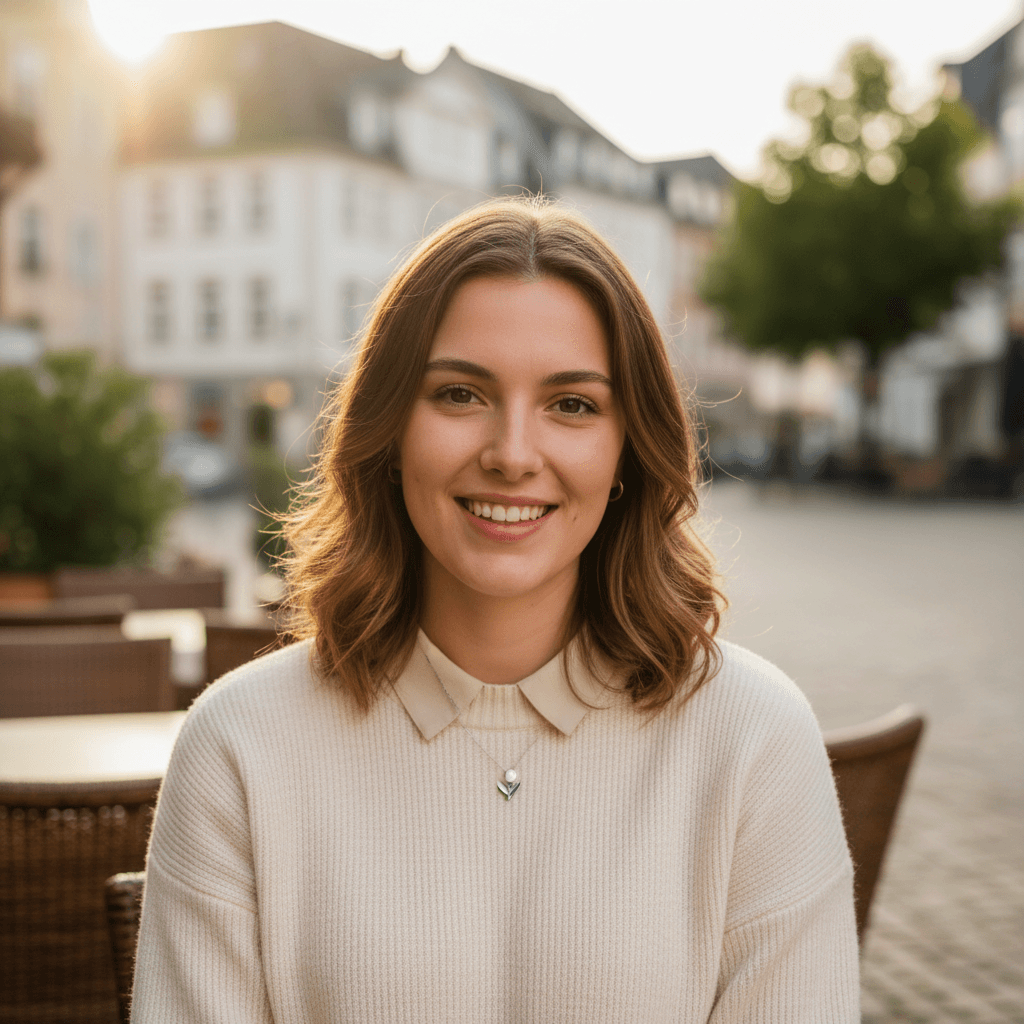
Sophie(22)
Den Bosch → Düsseldorf
After my college degree in pedagogy in Den Bosch I wasn't sure what I wanted. I spoke a bit of German from secondary school, but wanted to really learn it. A friend had a fantastic experience as an au pair in Austria, and I decided to try the same in Düsseldorf. Through AuPairWorld I found a host family with two children in Oberkassel.
As an EU au pair you don't need a visa, but the Anmeldung is still mandatory. My host family gave me a Wohnungsgeberbestätigung, and at the Bürgeramt I was registered within an hour. The au pair arrangement in Germany is clearly regulated: you work maximum 30 hours per week, receive at least €280 pocket money per month, have your own room and get room and board. My host family also paid for my Sprachkurs — an obligation according to the au pair rules.
The Sprachkurs at the Volkshochschule in Düsseldorf was intensive: four mornings per week, three months long. There were au pairs from Spain, Colombia, Russia and Japan in my class. In three months I went from A2 to B1 — enough to have daily conversations, do shopping and help the children with homework. The Sprachkurs cost €350, but my host family paid this.
The Krankenversicherung as an au pair was arranged through a special Au-Pair-Versicherung — an affordable health insurance for foreign au pairs. It cost €35 per month and covered basic care, dental and hospital stays. My host family also paid this premium. It's important to agree on this in advance — not all host families know they're responsible for this.
Living in a German family was the ultimate cultural immersion. I learned not only German, but also German customs: Abendbrot (cold dinner with bread and toppings), the Sonntagsspaziergang (Sunday walk), Kaffee und Kuchen at 15:00, and the Mülltrennung which I got wrong in the first week. The children taught me Kölsch dialect — much to the amusement of the parents.
After a year of au pairing I had B2-level German and a clear plan: I wanted to stay in Germany and start an Ausbildung (vocational training) as an Erzieherin (childcare worker). The Ausbildung takes three years and is a full program in Germany combining theory and practice. I've now started at a Fachschule für Sozialpädagogik in Düsseldorf. My au pair experience was the perfect springboard — I speak the language, know the culture and have a network. My advice to those hesitating: being an au pair is the fastest way to truly get to know a country.
Highlights
- Au pair: max 30 hours/week, min €280 pocket money, room and board
- Sprachkurs at VHS: from A2 to B1 in 3 months
- Au-Pair-Versicherung: €35/month for basic healthcare coverage
- Ausbildung as Erzieherin: 3-year vocational track in Germany
Other stories
Marco
Venlo → Düsseldorf
As a nurse I had been commuting across the border for years. When I decided to actually move to Düsseldorf, the real paperwork began.

Niels
Amsterdam → Berlijn
Amsterdam rent prices drove me away. Berlin offered a startup job, an affordable apartment and a vibrant nightlife.
Dennis & Laura
Arnhem → Kleve
With three children we moved from Arnhem to Kleve. A bigger house, Kindergeld and a Grundschule around the corner — but the German school system took some getting used to.